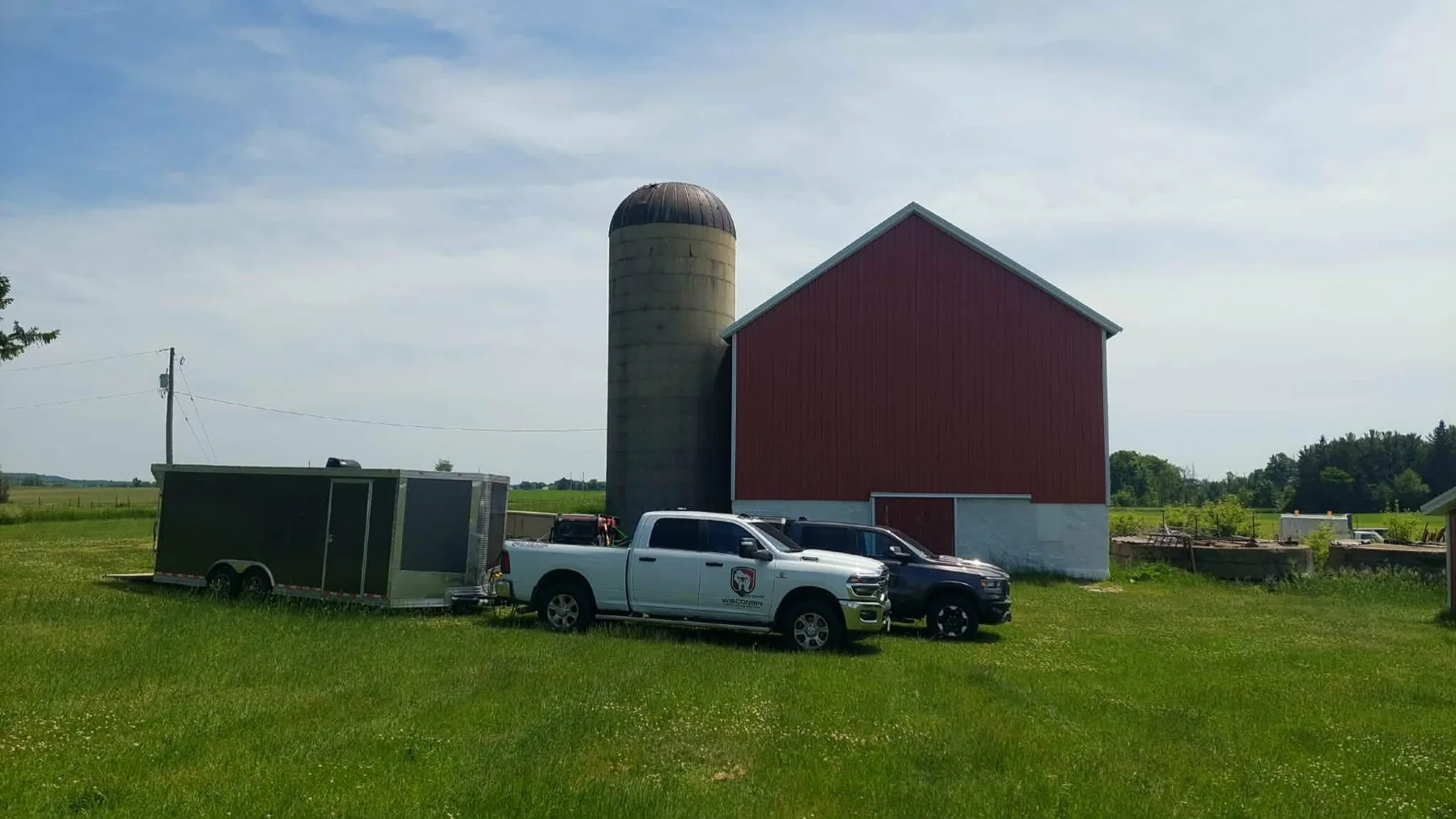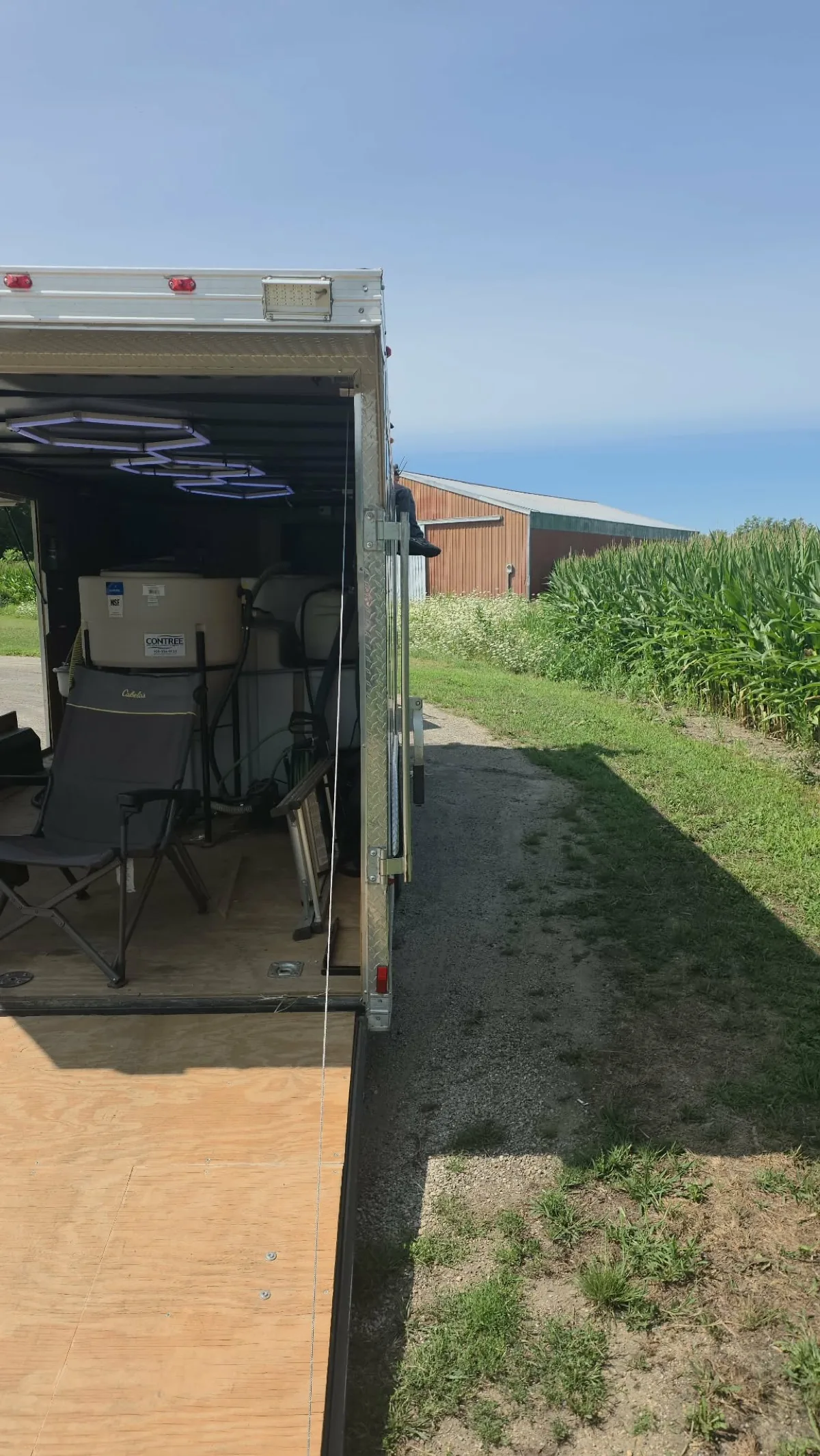
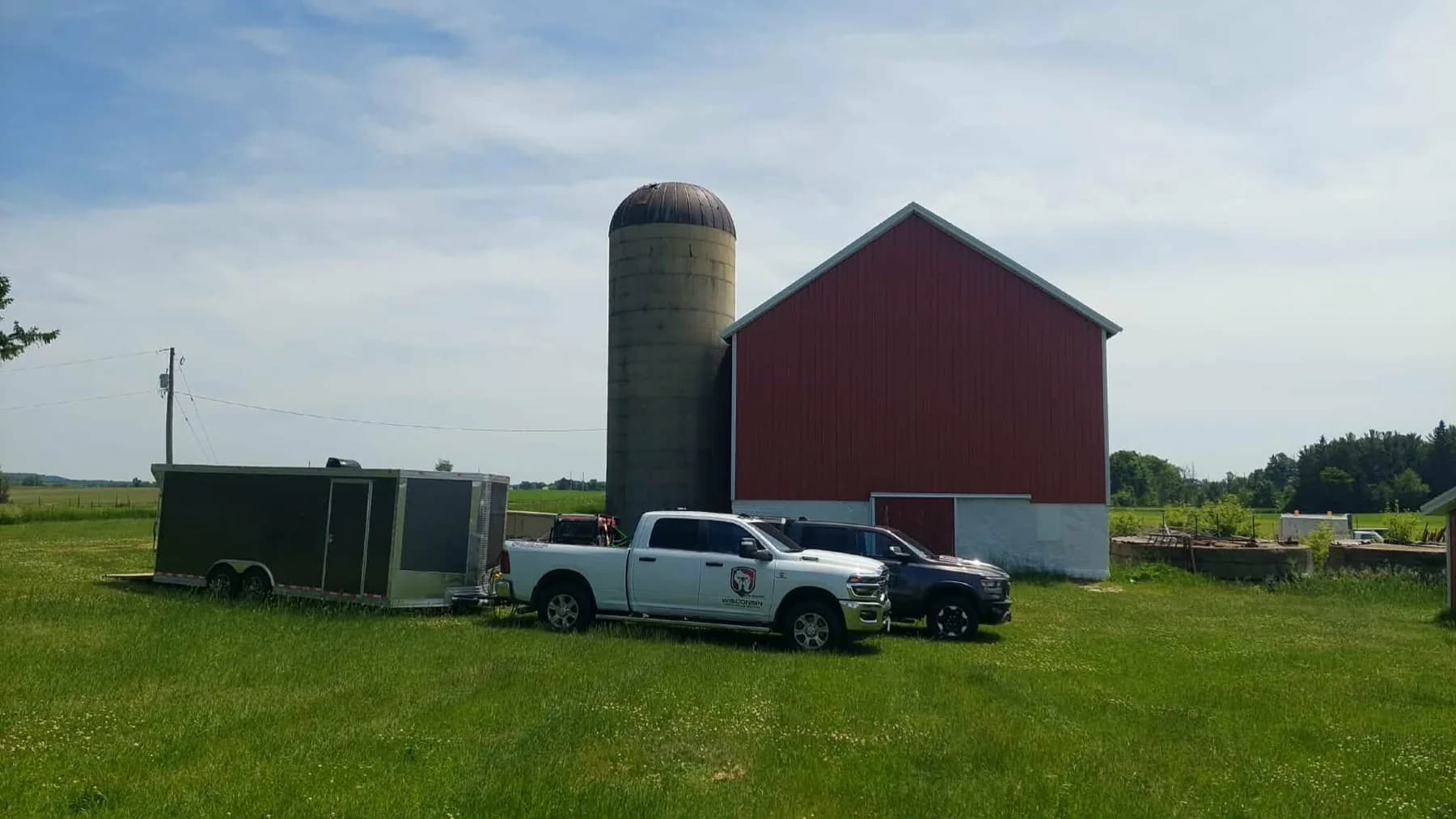
In Wisconsin Aerial’s owned agriculture media, the aircraft is only one part of the field picture. The images also show the field edge, nearby crop, controller position, transport or support equipment, and the space being used to stage the operation. Those visible details support a simple operational lesson: launch is not the beginning of the work.
Staging connects the plan to the actual field
A plan can look orderly away from the site. Staging is where it meets access, terrain, crop boundaries, people, equipment, and changing conditions. The field images do not prove a specific checklist was completed, but they do show why setup deserves its own deliberate phase before an aircraft moves.
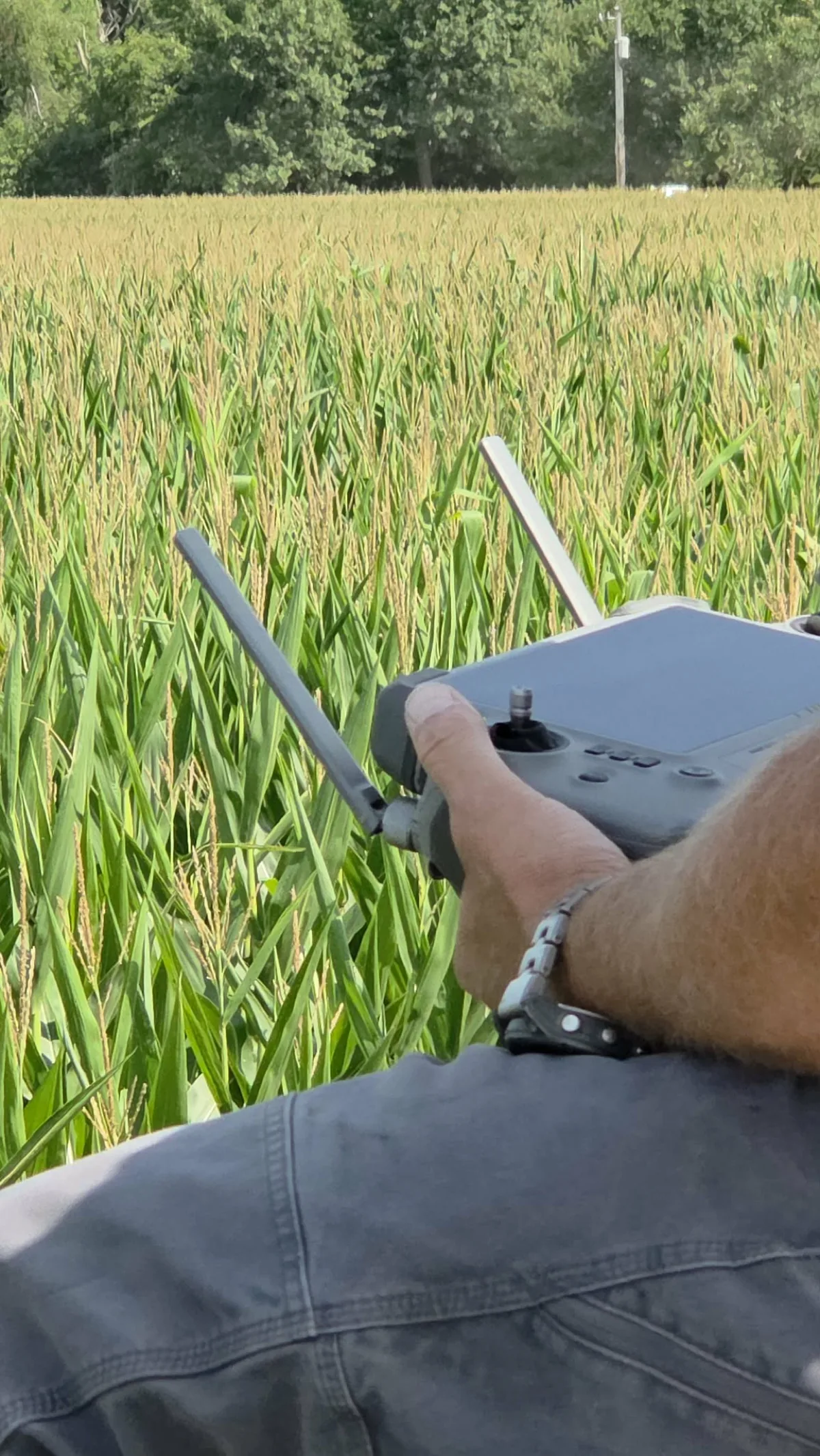
The controller position is part of the operation
One original image centers the operator and controller rather than the aircraft. That is useful context. The working position affects what the pilot can observe and how the operation is supported. It should be considered during setup, not accepted by default after unloading.
Support equipment is mission equipment
The deployment image includes more than a drone. Field work depends on the surrounding support system being organized for the proposed job. The exact equipment and procedure vary; this note does not claim a product, rate, capacity, or result. It documents the broader point that the operational system extends beyond the aircraft.
The go/no-go decision stays open
Good staging does not guarantee that a mission should launch. It creates a structured moment to compare the proposed work with the conditions actually present and to stop when something does not fit. That decision discipline is more valuable than forcing a plan simply because the aircraft reached the field.
This field note is intentionally narrow. The owned images support the observations above, but they do not establish a customer, location, date, acreage, aircraft model, material, application rate, regulatory status, or outcome.